The Complete Hair Restoration Slide Deck
Every visual guide from the Hair Loss Treatments research notebook in one place — the efficacy scale, scalp cooling, supplements, SMP safety, and the full clinical science presentation. Scroll through the deck, then dig into the individual guides for the details. This is written for people around Bellevue, WA who are looking into acell hair restoration and want the honest version rather than a sales page.
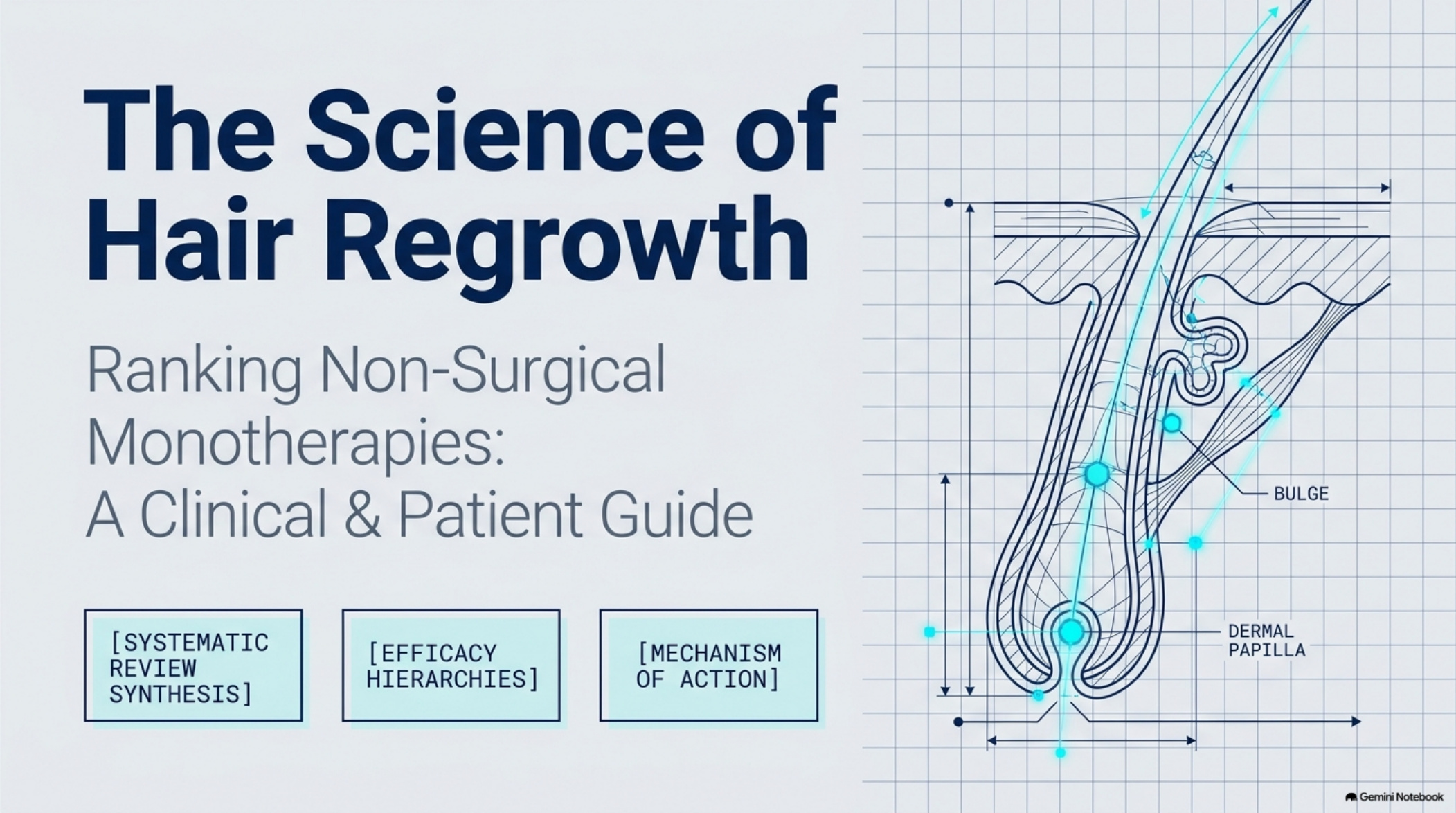
Slide 1 — The Science of Hair Regrowth (Title)
Ranking non-surgical monotherapies for androgenetic alopecia: a clinical and patient guide built from systematic-review hierarchies and sites of action — from the follicular bulge to the dermal papilla.
The short version
- The deck collects every visual guide from the Hair Loss Treatments research notebook, covering the efficacy scale, scalp cooling, supplements, SMP safety and the full clinical science presentation.
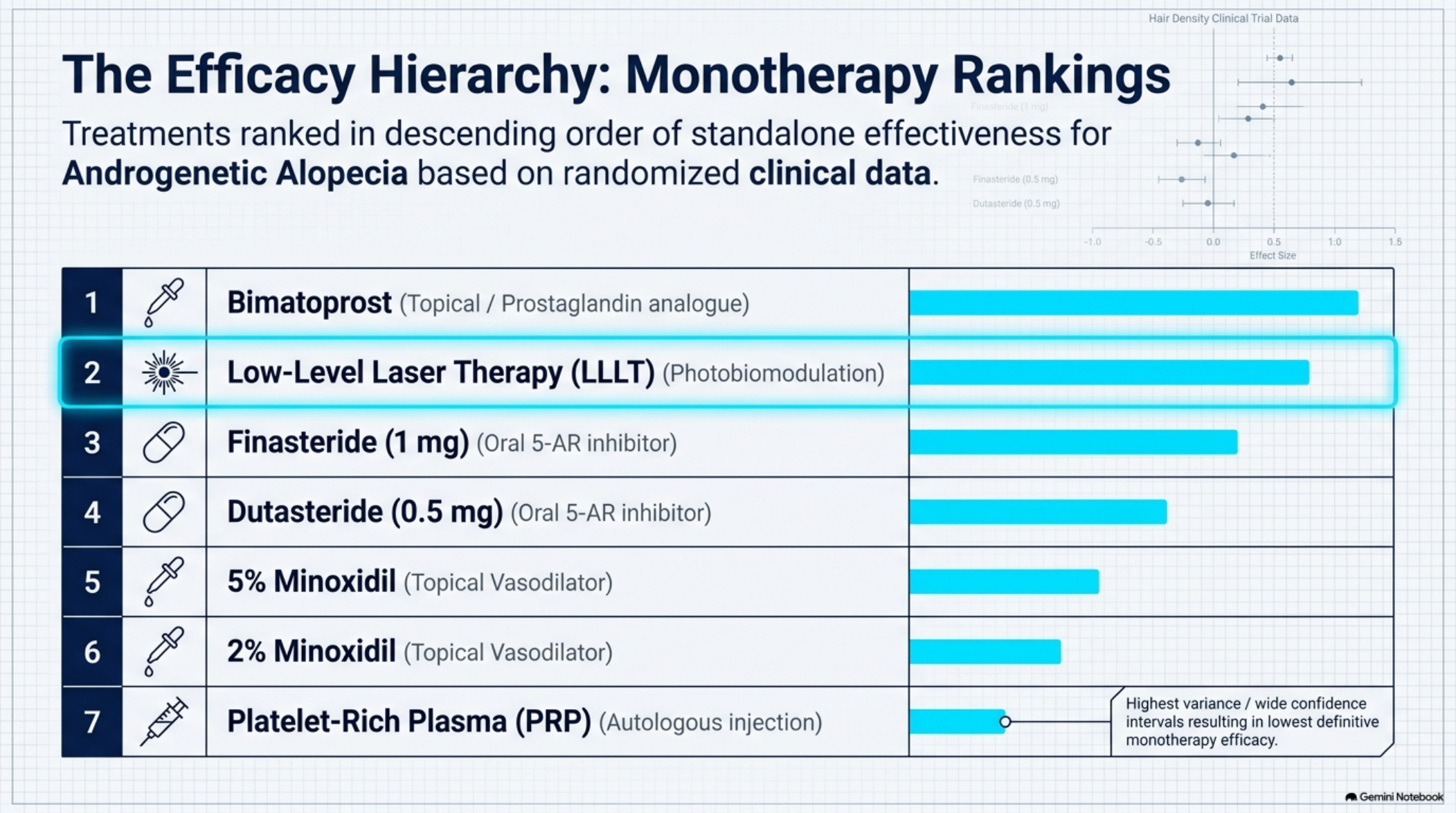
- One slide ranks monotherapies by standalone effectiveness from randomized data: bimatoprost, LLLT, finasteride, dutasteride, 5% and 2% minoxidil, then PRP with the widest confidence intervals.
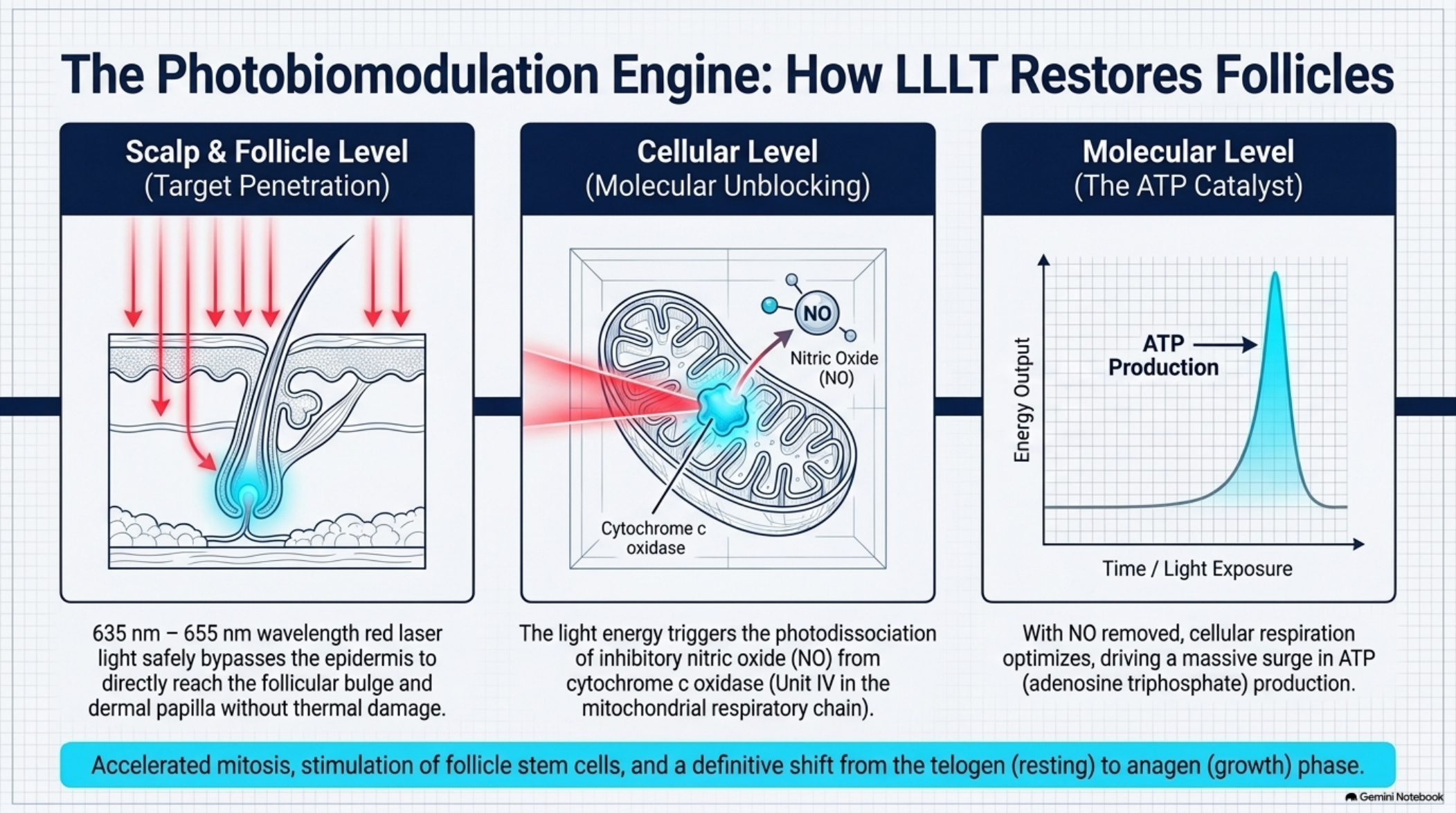
- The LLLT slide explains how 635 to 655 nanometer light triggers photodissociation of inhibitory nitric oxide from cytochrome c oxidase and drives an ATP surge.
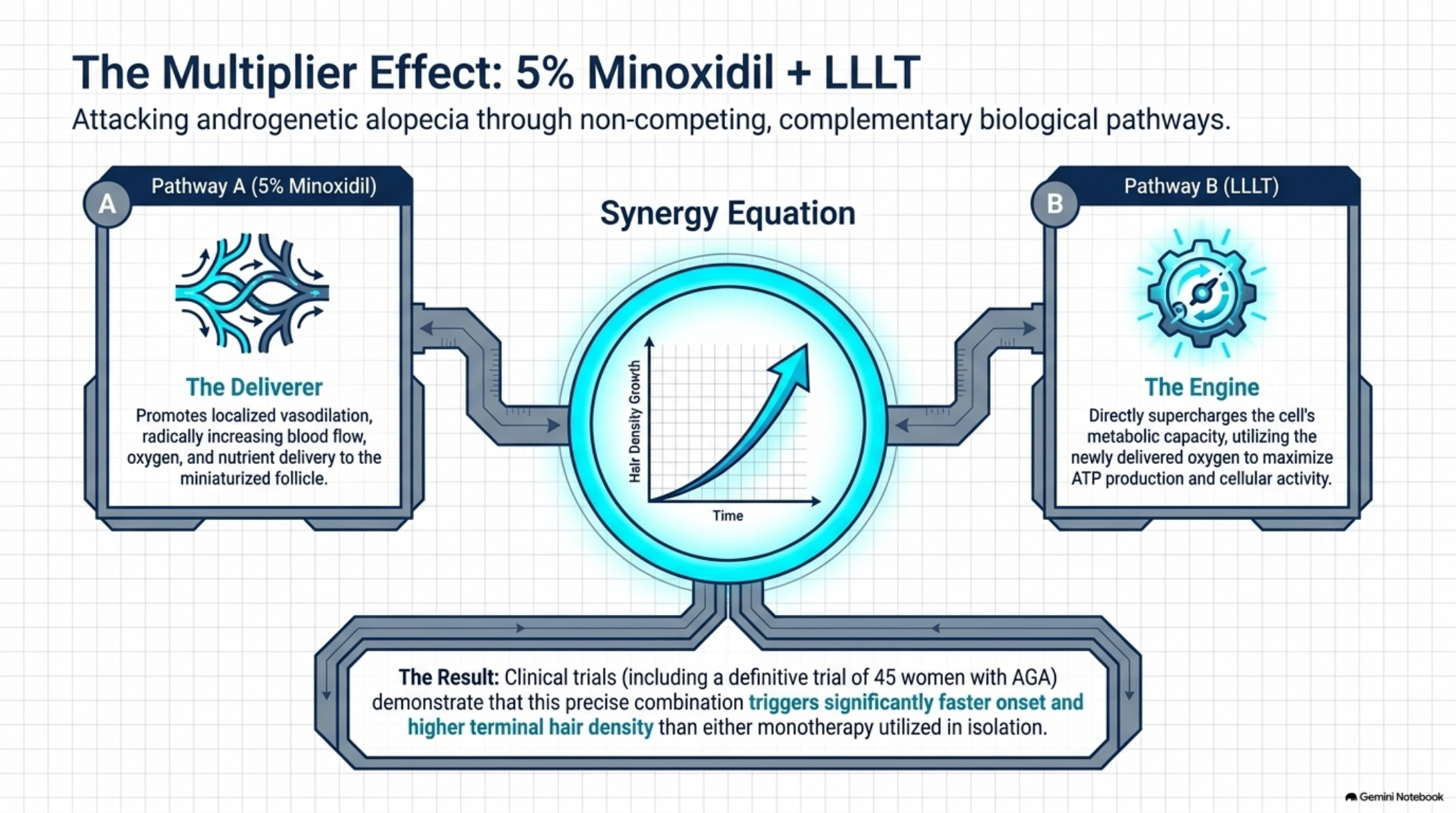
- The multiplier-effect slide covers 5% minoxidil plus LLLT acting on non-competing pathways, with a 45-woman AGA study showing faster onset and higher terminal density than either alone.
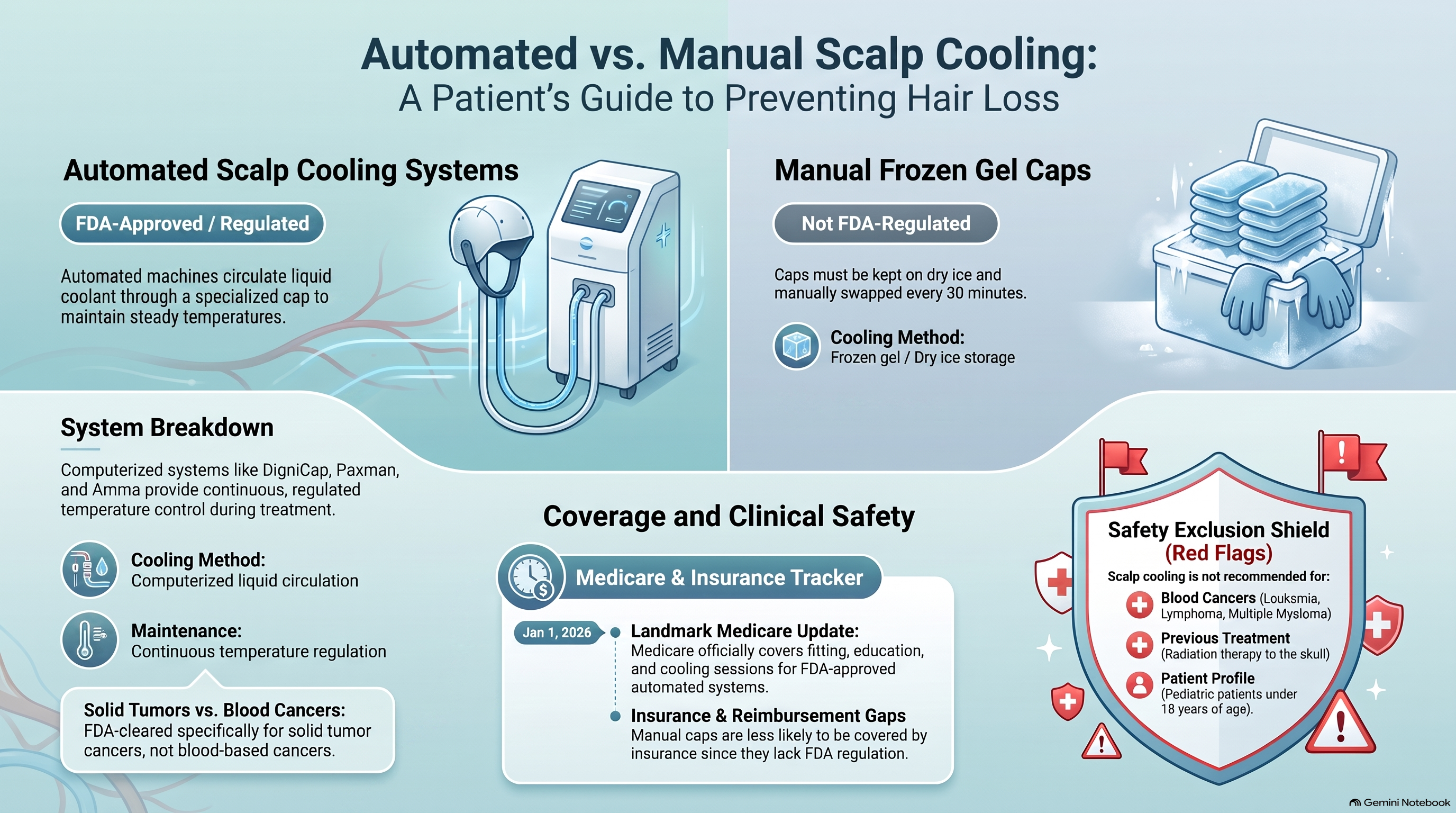
- The scalp cooling slide contrasts automated FDA-regulated systems with continuous temperature control, covered by Medicare from 2026, against manual frozen gel caps needing swaps every 30 minutes.
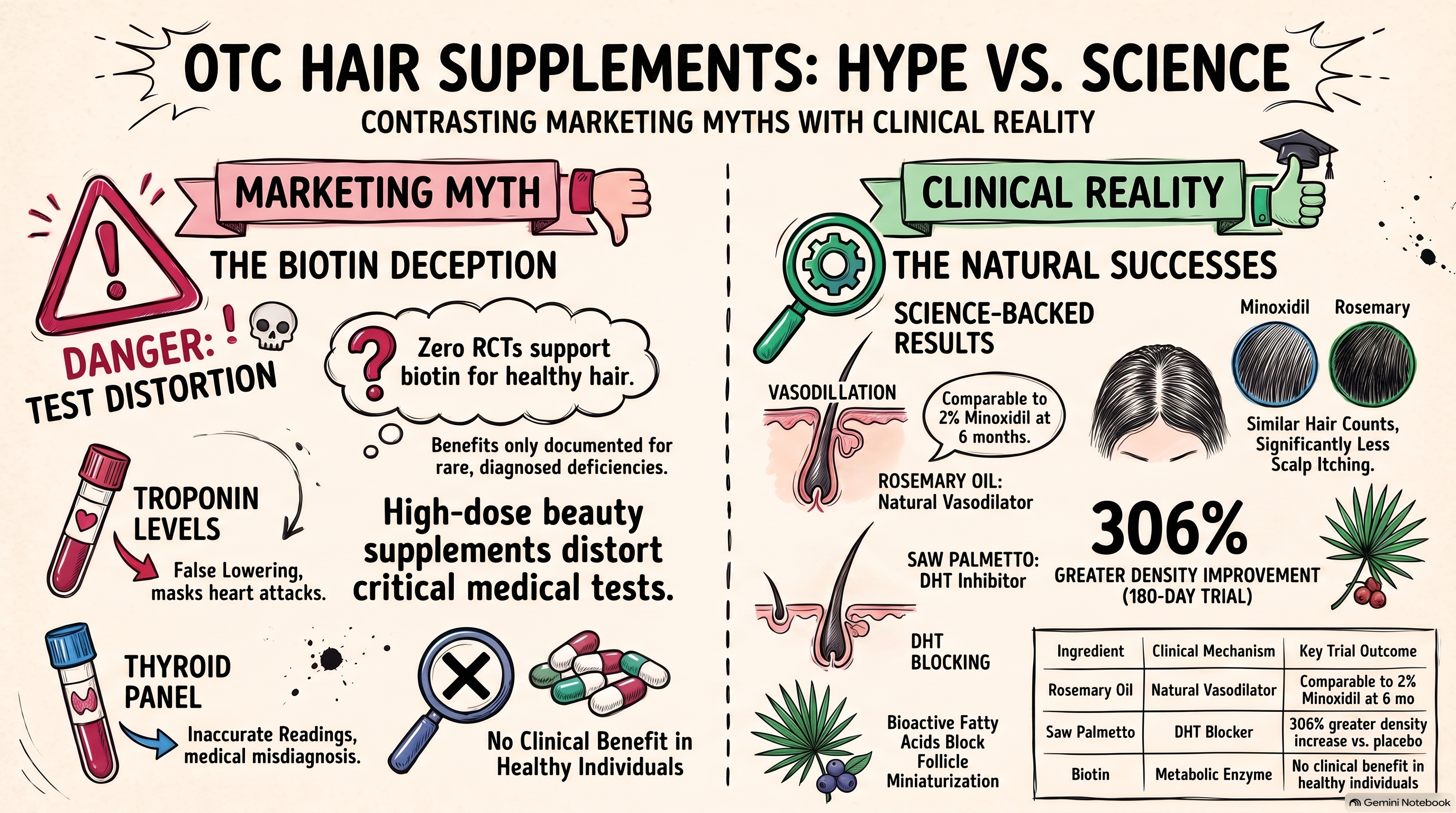
- The supplements slide contrasts biotin's zero-RCT record with rosemary oil's minoxidil-matching trial and saw palmetto's 306% density improvement.
Slide 2 — The Efficacy Hierarchy
Treatments ranked in descending order of standalone effectiveness for androgenetic alopecia based on randomized clinical data — bimatoprost, LLLT, finasteride, dutasteride, 5% and 2% minoxidil, then PRP with the widest confidence intervals.
Slide 3 — The Photobiomodulation Engine
How LLLT restores follicles: 635–655 nm light reaches the follicular bulge and dermal papilla, triggering photodissociation of inhibitory nitric oxide from cytochrome c oxidase — unblocking cellular respiration and driving an ATP surge.
Slide 4 — The Multiplier Effect
5% minoxidil (the deliverer — vasodilation and nutrient delivery) plus LLLT (the engine — ATP capacity) attack non-competing pathways. Trials, including a definitive 45-woman AGA study, show faster onset and higher terminal density than either alone.
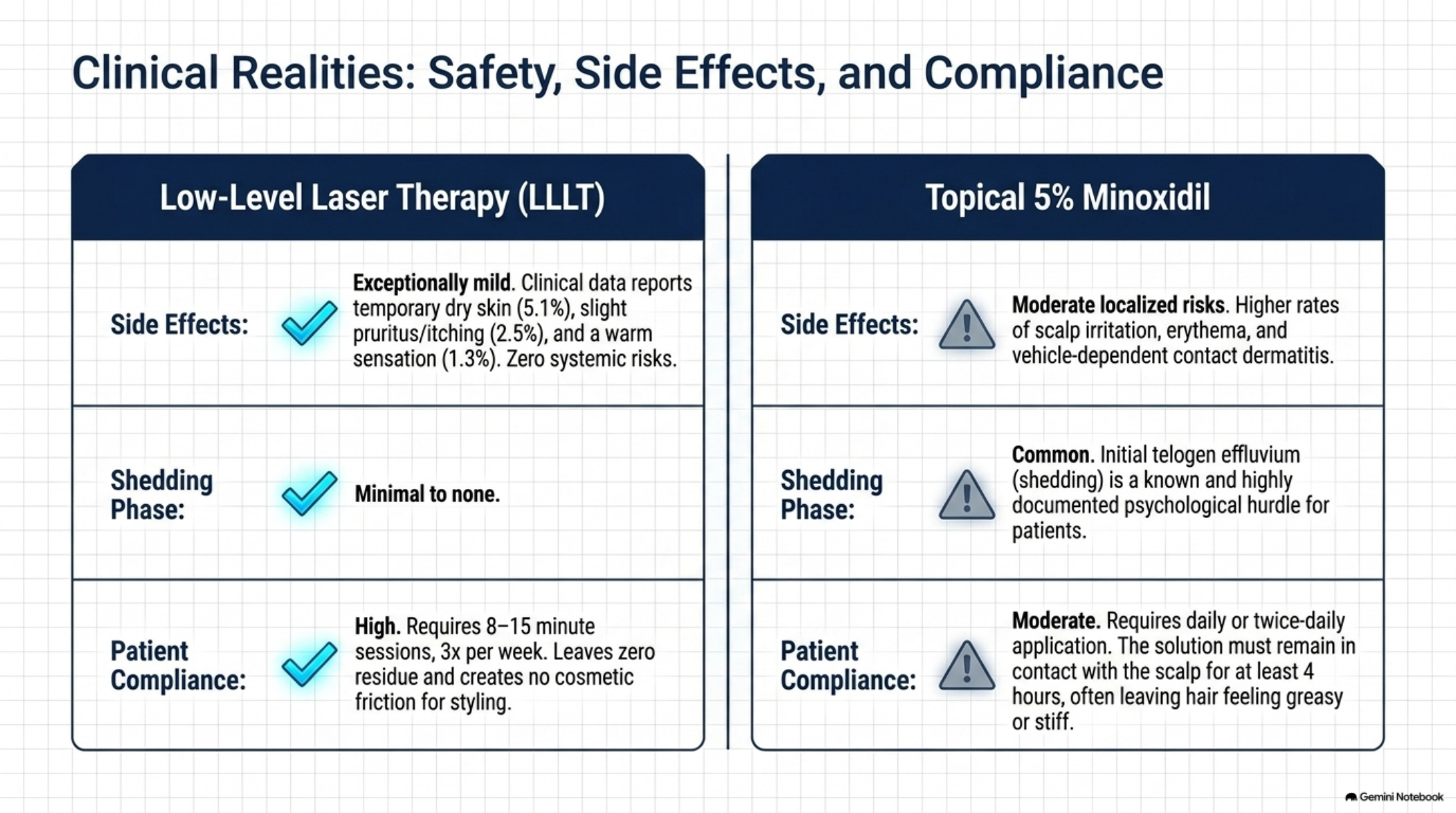
Slide 5 — Clinical Realities
Side effects and compliance: minoxidil's mild profile (dry skin 5.1%, pruritus 2.5%), LLLT's localized irritation, and the initial shedding phase that makes patients quit right as treatment starts working.
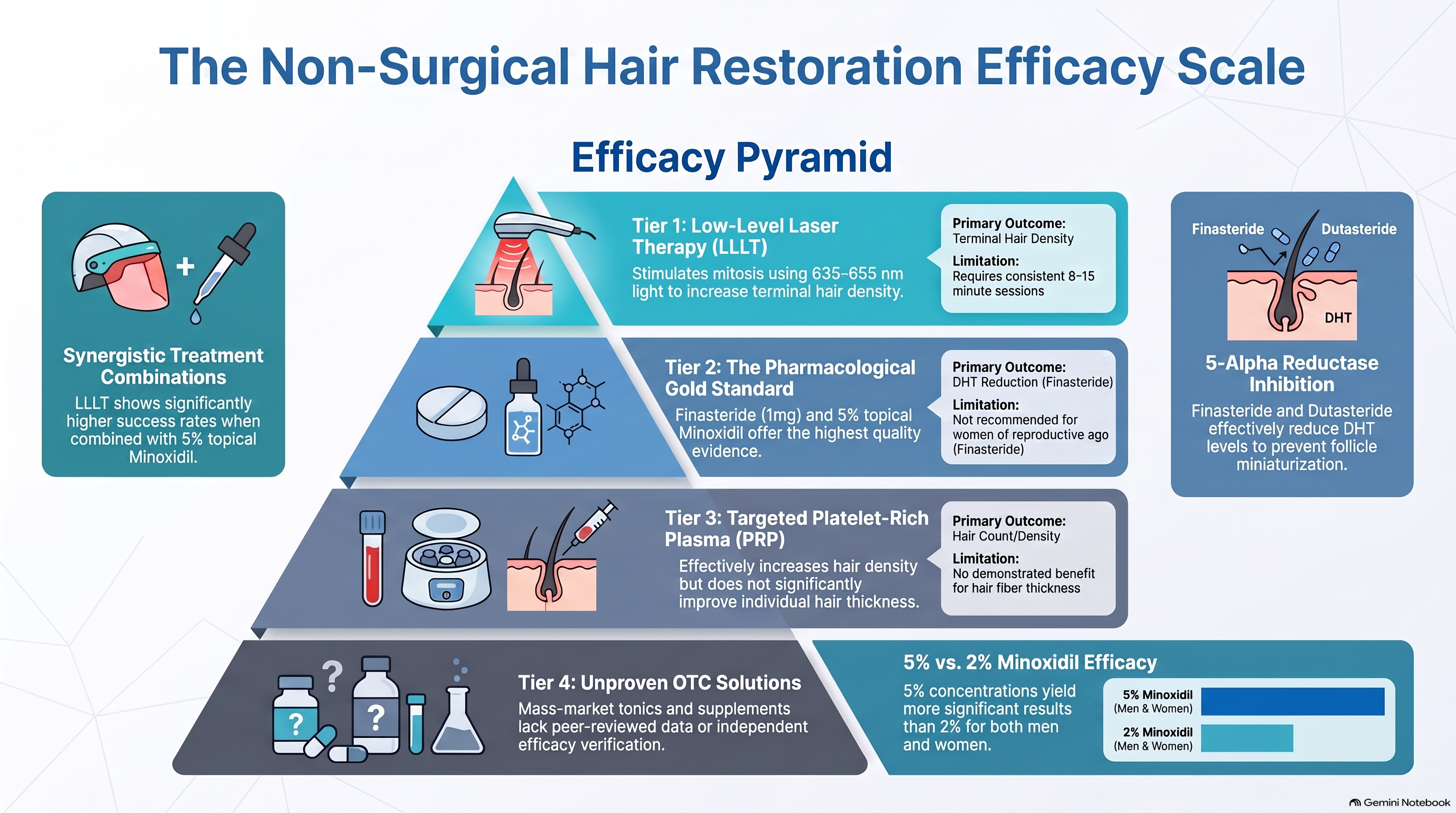
Slide 6 — The Efficacy Scale
The non-surgical hair restoration efficacy pyramid: terminal hair density therapy (LLLT), the pharmacological gold standard (DHT reduction), and targeted PRP — with the limitation notes marketing never shows you.
Slide 7 — Scalp Cooling Guide
Automated vs. manual scalp cooling for chemo hair loss: FDA-regulated systems with continuous temperature control vs. manual frozen gel caps needing 30-minute swaps — and the 2026 Medicare coverage change for automated systems.
Slide 8 — Supplements: Hype vs. Science
Biotin's zero-RCT myth and lab-test distortion vs. rosemary oil's minoxidil-matching trial and saw palmetto's 306% density improvement.
Slide 9 — SMP Science and Safety
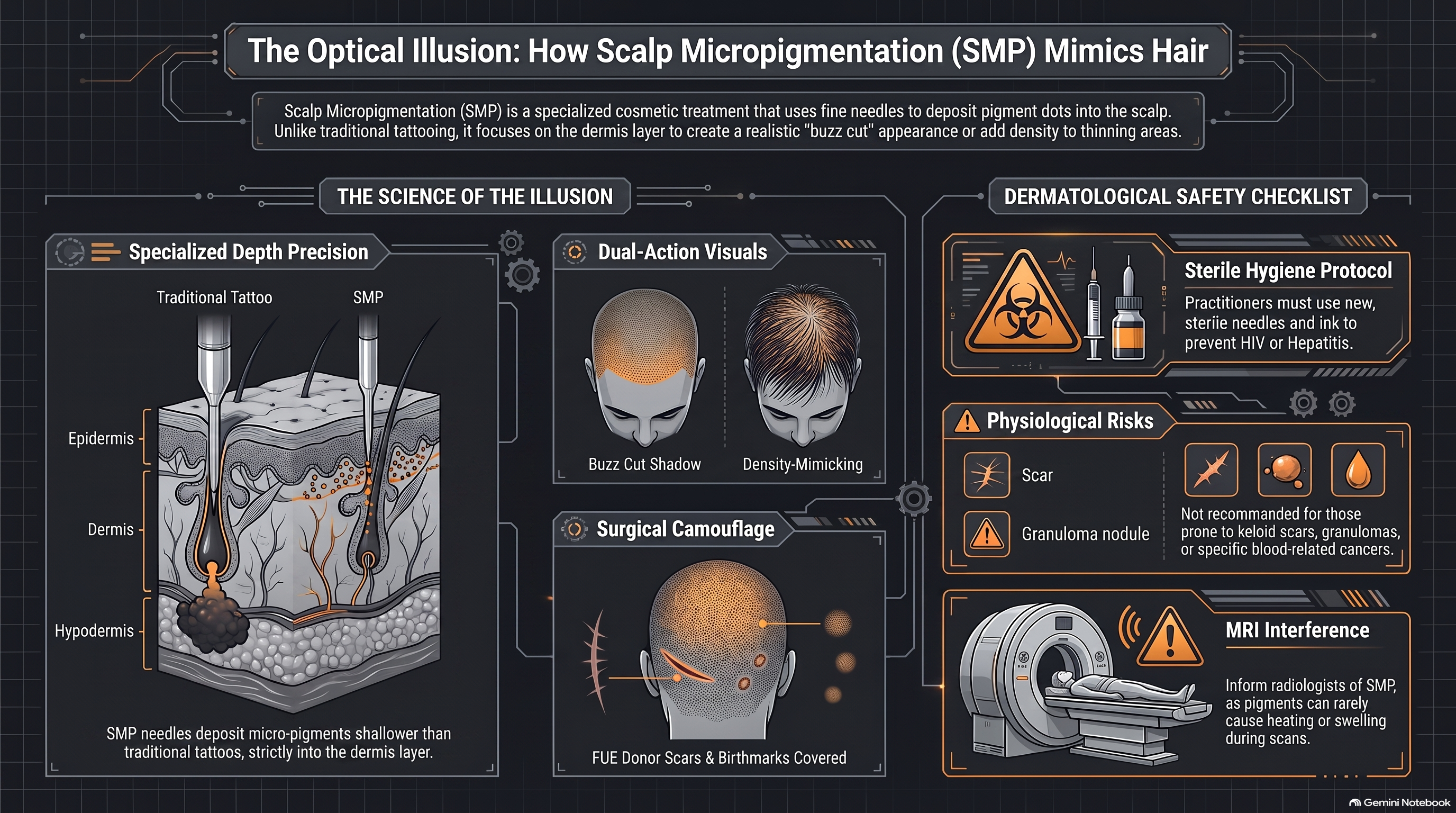
The dermis-level illusion, FUE scar camouflage, and the dermatological safety checklist: sterile needles and ink, keloid screening, and MRI disclosure.
Dig Deeper
Each slide has a full guide: the clinical science, the efficacy scale, scalp cooling, supplements, and SMP safety.
Ready for a Professional Review?
We can connect you with qualified hair restoration professionals.
Get Matched with Hair Restoration Professionals