Scalp Micropigmentation: The Science of the Illusion and the Safety Checklist
SMP is a specialized cosmetic treatment that uses fine needles to deposit pigment dots into the scalp — creating a realistic "buzz cut" appearance or adding density to thinning areas. Most people who read this are comparing chemotherapy scalp cooling options around Bellevue, WA, so what follows sticks to the details that change in practice.
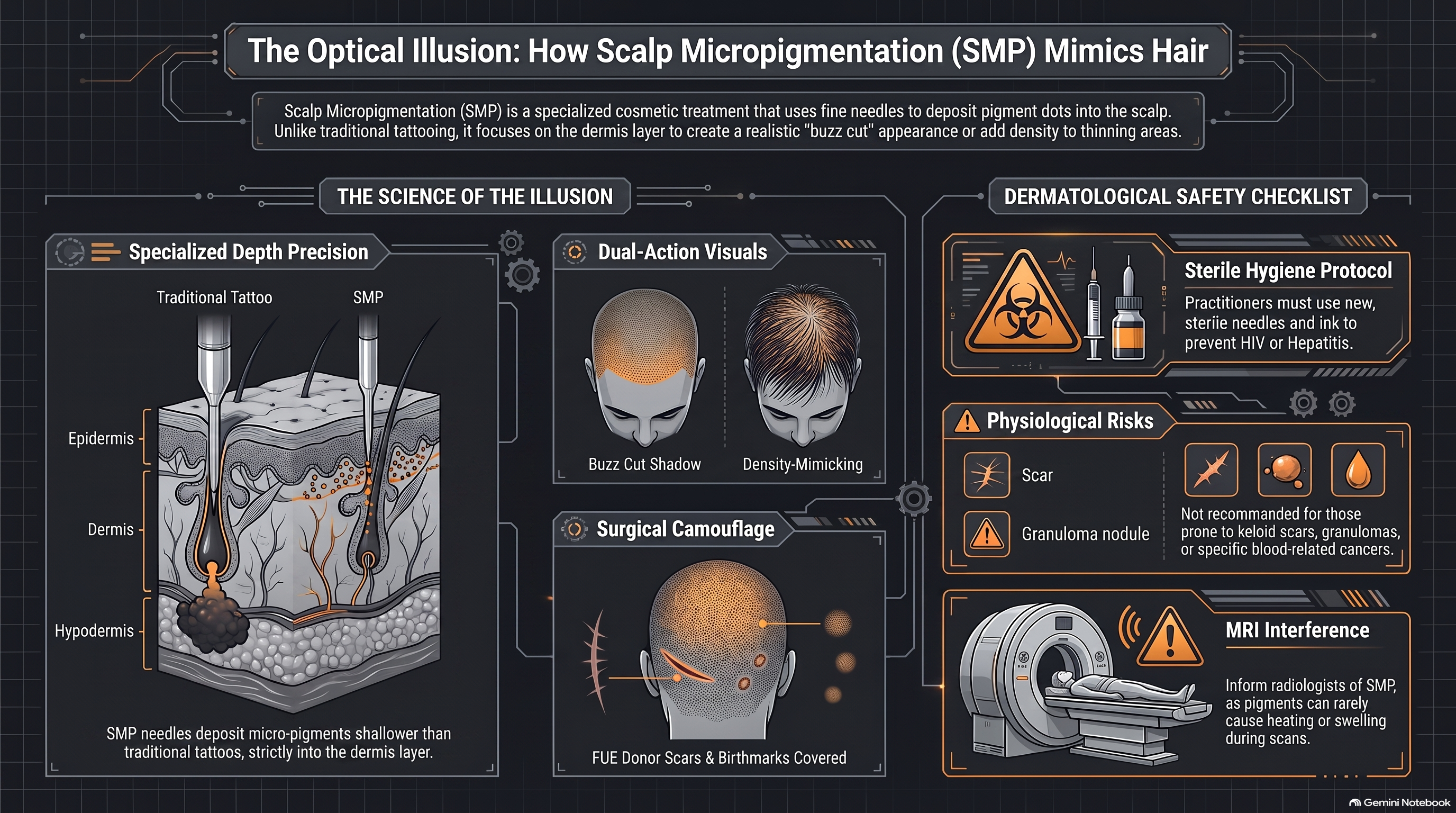
The Science of the Illusion
Unlike traditional tattooing, SMP focuses on the dermis layer — shallower than a tattoo — which keeps the dots crisp and follicle-like rather than blurry. Each tiny deposit mimics the visual of a shaved hair follicle, so the scalp reads as "full" from a normal viewing distance. The same technique covers FUE donor scars on the back of the scalp.
The short version
- SMP uses fine needles to deposit pigment dots into the dermis, which is shallower than a traditional tattoo and keeps each dot crisp and follicle-like rather than blurry.
- Each tiny deposit mimics the visual of a shaved hair follicle so the scalp reads as full from a normal viewing distance, and the same technique covers FUE donor scars.
- Safety requires sterile single-use needles and fresh ink to prevent HIV or hepatitis transmission, and SMP is not recommended for people prone to keloids or granulomas or with specific blood-related cancers.
- Depth discipline is a two-way rule: pigment placed too deep creates tattoo-style blur, and pigment placed too shallow fades fast.
- Pigment can interfere with MRI scans, so the page says to always disclose SMP before imaging.
- SMP typically costs 2,000 to 4,000 dollars depending on the treated area, with minimal fading over 7 to 32 months and eventual touch-ups, delivered across 2 to 4 hour weekly sessions.
The Dermatological Safety Checklist
Safety comes down to the practitioner's hygiene and your medical screening:
- Sterile hygiene protocol: practitioners must use new, sterile needles and ink to prevent HIV or Hepatitis transmission.
- Medical exclusions: SMP is not recommended for those prone to keloid scars, granulomas, or specific blood-related cancers.
- Depth discipline: pigment must stay in the dermis — too deep creates tattoo-style blur, too shallow fades fast.
- MRI awareness: pigment can interfere with MRI scans; always disclose SMP before imaging.
Costs and Longevity
SMP typically runs 2,000–4,000 depending on the treated area, with fading minimal over 7–32 months and eventual touch-ups. It's non-surgical, delivers immediate results across 2–4 hour weekly sessions, and pairs beautifully with transplants for scar camouflage and density.
Get matched with hair restoration professionals →
Ready for a Professional Review?
We can connect you with qualified hair restoration professionals who can map your situation to the right treatment.
Get Matched with Hair Restoration Professionals