The Science of Hair Regrowth: What the Clinical Data Really Says
Walk into any hair loss clinic and you'll hear the same words — "clinically proven," "doctor-approved," "revolutionary." The reality is more interesting: when non-surgical treatments are actually ranked against each other using randomized clinical data, the order surprises most people. The hierarchy that comes out of systematic reviews isn't based on how loudly something is marketed. It's based on how much of the hair follicle's biology a treatment can genuinely influence — from the follicular bulge where stem cells live, down to the dermal papilla that drives each hair's growth cycle.
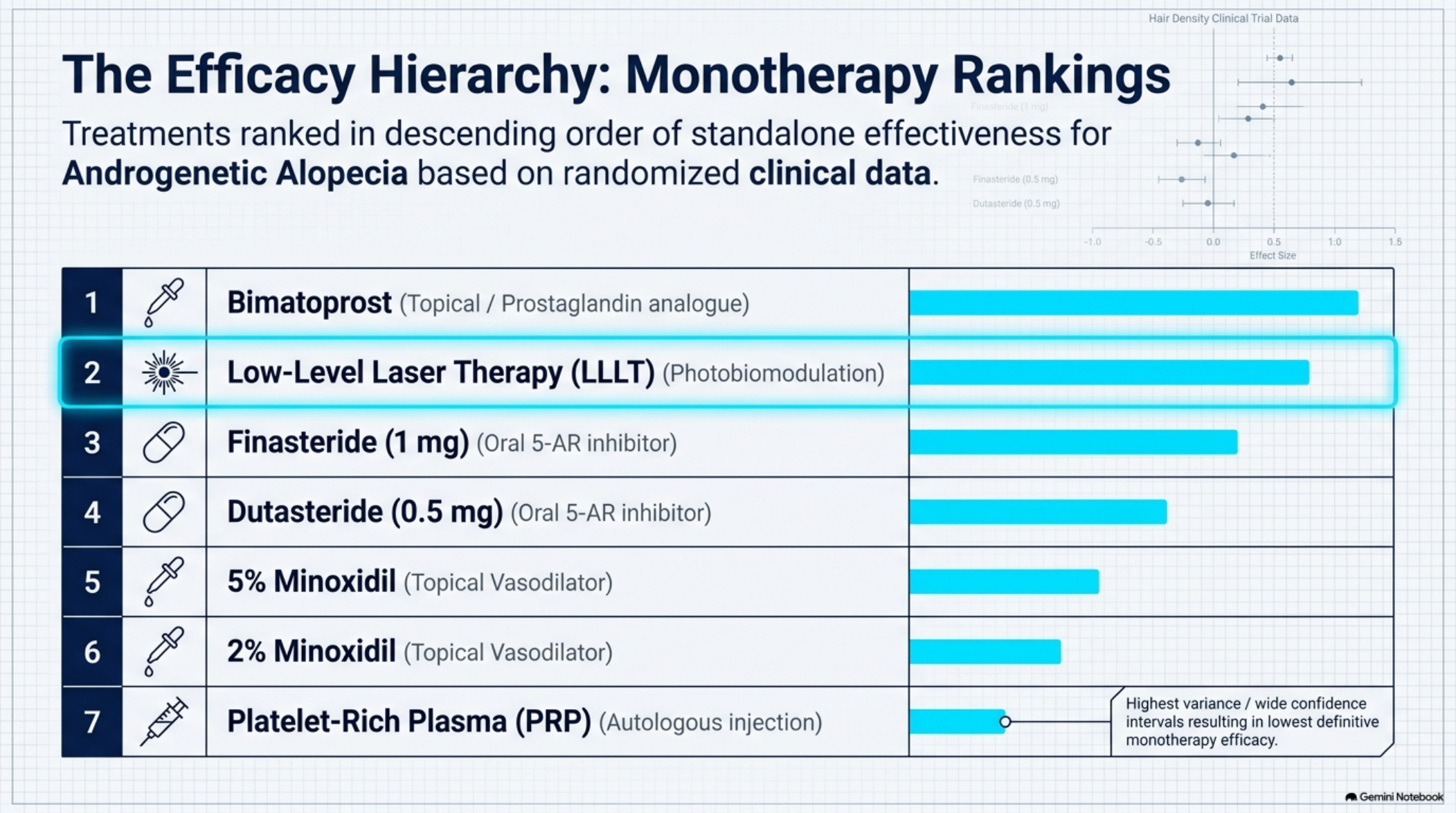
At the top of that hierarchy sit the treatments that target the follicle most directly. Bimatoprost, a topical prostaglandin analogue, leads the rankings — followed closely by low-level laser therapy, which works through photobiomodulation rather than chemistry. The oral 5-alpha reductase inhibitors, finasteride and dutasteride, hold the middle of the table, with topical minoxidil at 5% and 2% concentrations behind them. Platelet-rich plasma closes the list — not because it doesn't do anything, but because its trials show the highest variance and the widest confidence intervals, which is exactly why its evidence is graded only moderate.
The short version
- The hierarchy ranks non-surgical treatments by how much of the follicle's biology they influence, from the follicular bulge where stem cells live down to the dermal papilla driving the growth cycle.
- Bimatoprost leads the monotherapy ranking, followed by low-level laser therapy, then oral finasteride and dutasteride, then topical minoxidil at 5% and 2%, with platelet-rich plasma closing the list.
- PRP's evidence is graded only moderate because its trials show the highest variance and widest confidence intervals of the group.
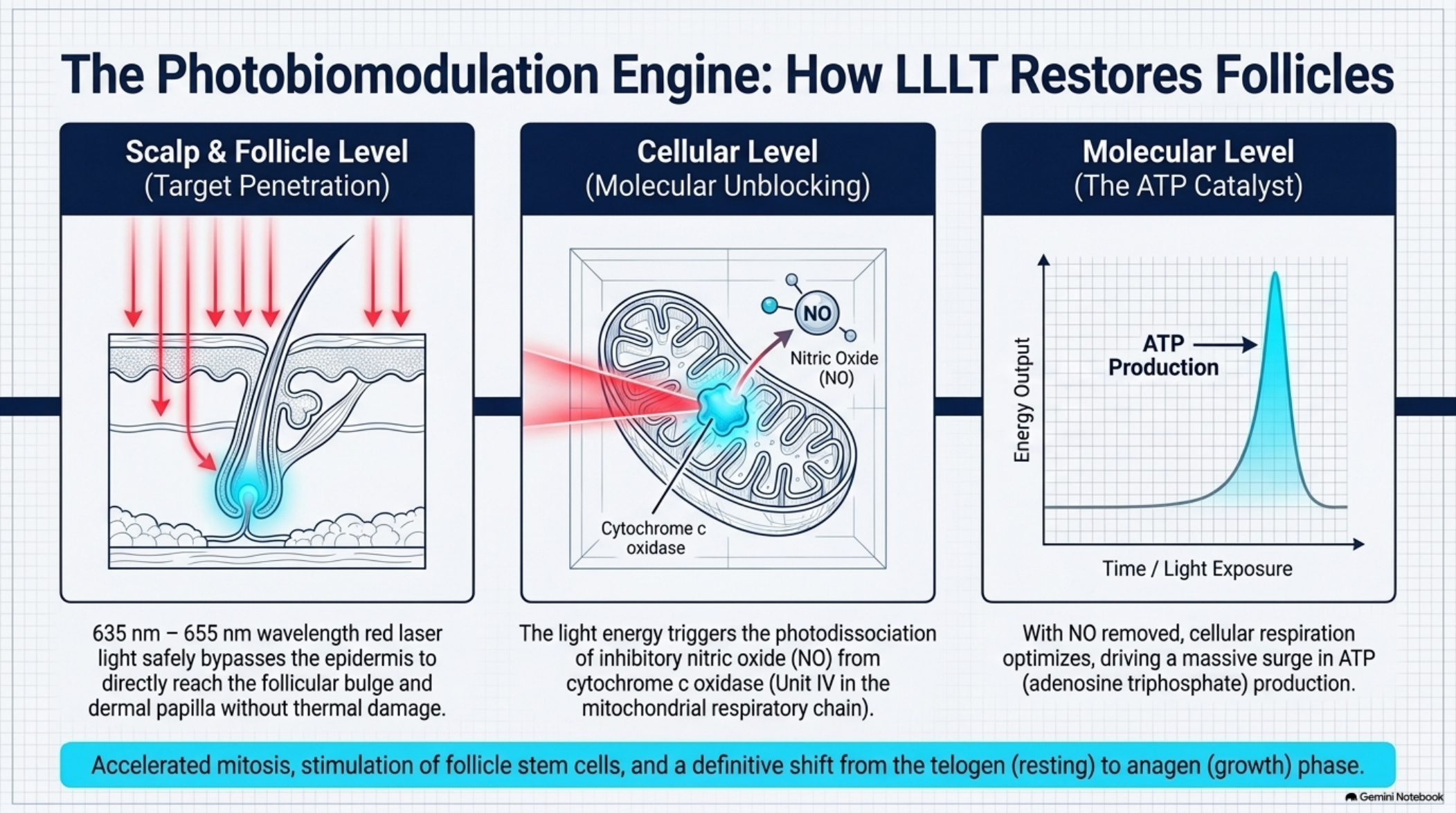
- LLLT at 635 to 655 nanometers passes through the epidermis without heat and removes inhibitory nitric oxide from cytochrome c oxidase, releasing a brake on cellular respiration.
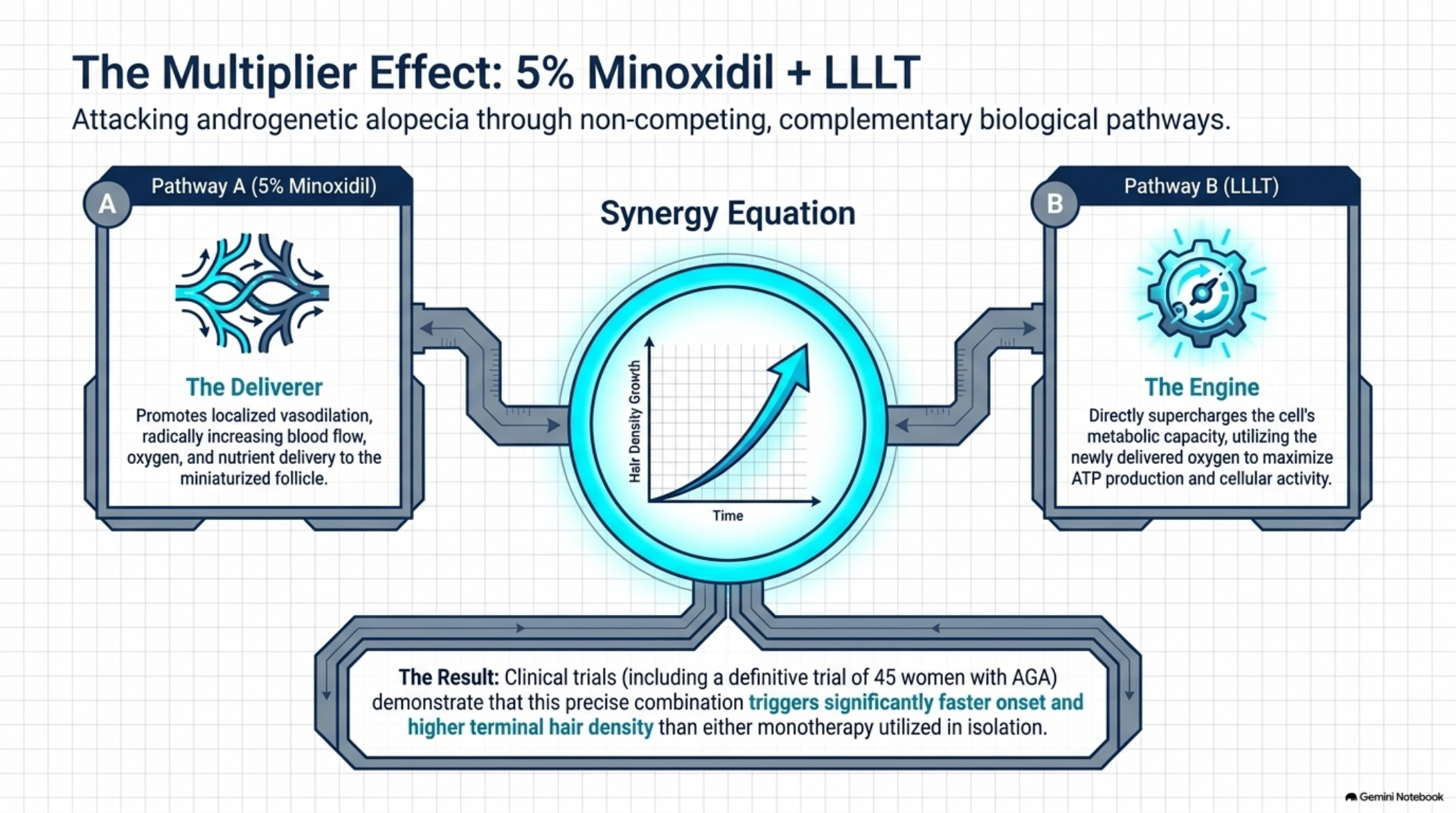
- Minoxidil acts as the deliverer through vasodilation while LLLT acts as the engine, and a definitive 45-woman AGA study showed faster onset and higher terminal hair density for the pair.
- The initial shedding phase, in which miniaturized hairs release so stronger ones can replace them, is the leading reason patients abandon treatment just as it starts working.
Understanding why LLLT ranks so high requires a look at the molecular machinery it engages. Red laser light in the 635–655 nm range passes safely through the epidermis — no heat, no damage — and reaches the follicular bulge and dermal papilla directly. There, the light performs what researchers call photodissociation: it removes inhibitory nitric oxide from cytochrome c oxidase, a critical enzyme in the mitochondrial respiratory chain. With that brake released, cellular respiration optimizes, and the follicle's energy production surges. It's a remarkably elegant mechanism — light isn't stimulating the follicle chemically; it's removing the chemical that was suppressing the follicle's own engine.
The most interesting part of the evidence, though, is what happens when you combine treatments. Minoxidil and LLLT attack the problem through completely different pathways, which is precisely why they amplify each other. Minoxidil is the deliverer: it promotes localized vasodilation, radically increasing the blood flow, oxygen, and nutrients reaching a miniaturized follicle. LLLT is the engine: it supercharges the cell's metabolic capacity so it can actually use that newly delivered oxygen. The clinical trials — including a definitive study of 45 women with androgenetic alopecia — show that this pairing produces significantly faster onset and higher terminal hair density than either treatment used alone. The multiplier effect is real, and it's the reason combination protocols have become the standard of care.
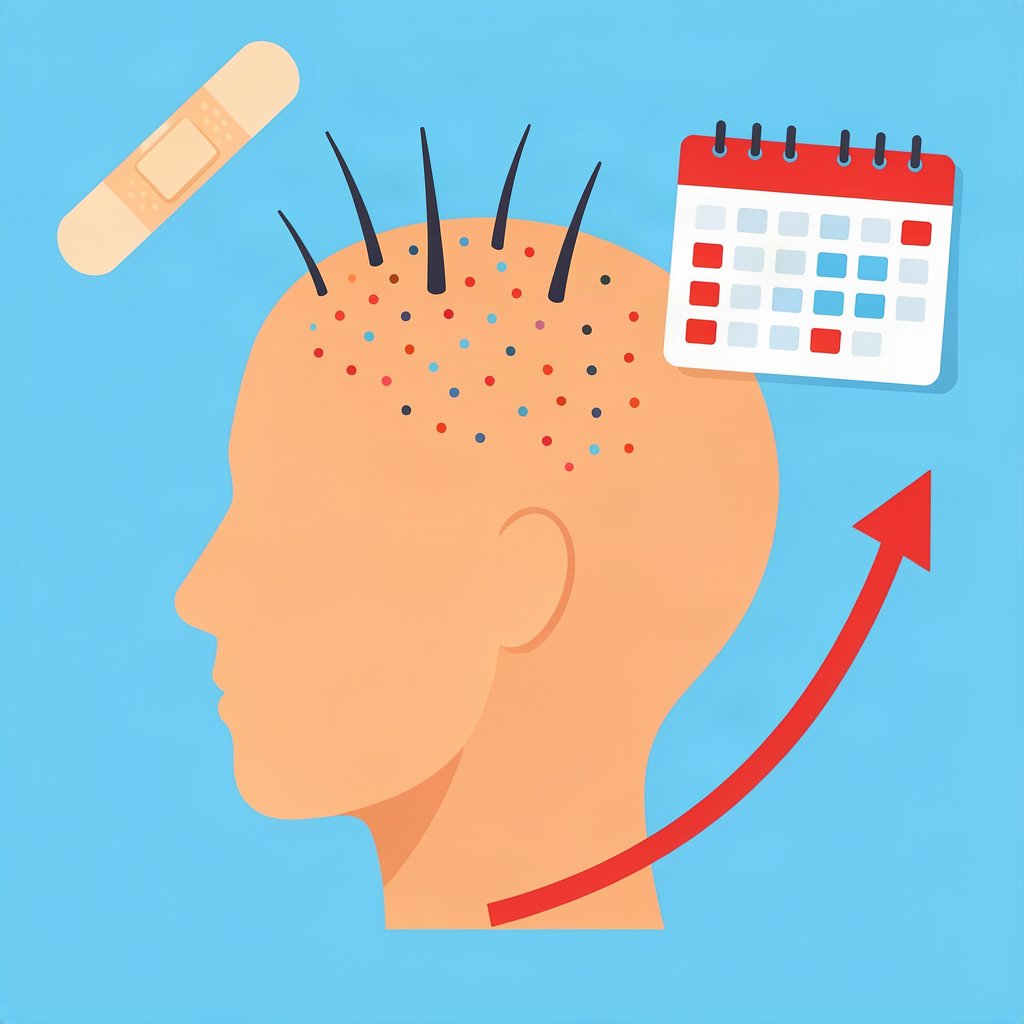
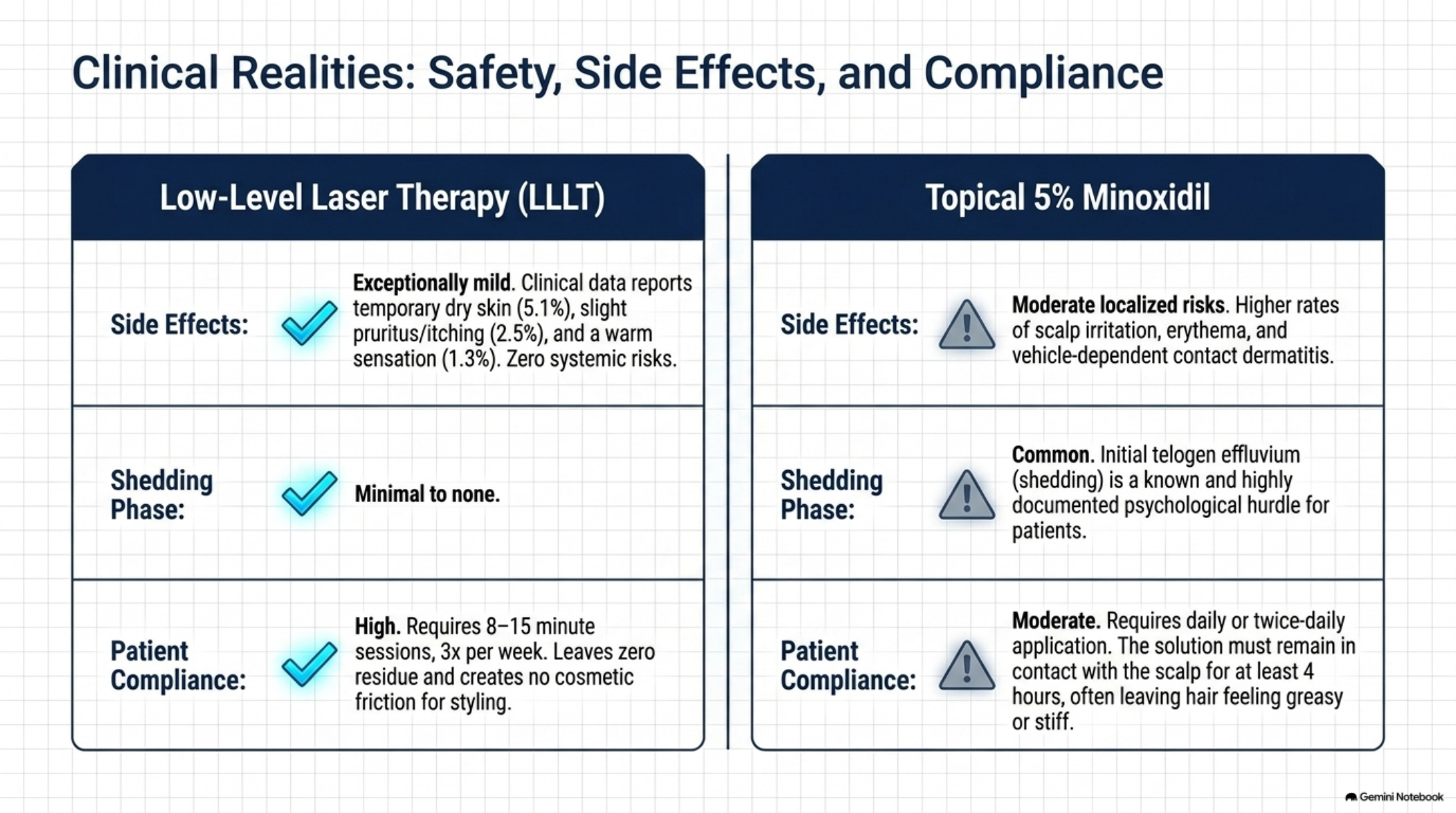
None of this works without managing expectations about side effects and timelines. Topical minoxidil is genuinely mild — the clinical data reports temporary dry skin in about 5% of users, slight itching in 2.5%, and a warm sensation in just over 1%, with no systemic risks. LLLT has its own localized profile: scalp irritation, erythema, and contact dermatitis that depends on the device. And both treatments share a moment that scares more patients away than any side effect: the initial shedding phase. In the first weeks, miniaturized hairs are released so that stronger hairs can take their place — telogen effluvium, the visible sign that the treatment has started engaging the follicle cycle. It's the #1 reason people quit, right at the moment the treatment begins working.
The bottom line is that hair restoration is a maintenance discipline, not a miracle product. The evidence supports proven medications, consistent laser therapy, and combination protocols — and it is unforgiving to supplements and unproven "breakthroughs." If you're deciding what's worth your money, start with the hierarchy: understand where a treatment sits, what its trials actually showed, and what its limitations are. That's the difference between a treatment plan built on clinical data and one built on advertising.
Next Steps
This presentation is the foundation for everything else in the guide: the efficacy scale, the scalp cooling guide, and the full clinical hierarchy.
Ready for a Professional Review?
We can connect you with qualified hair restoration professionals.
Get Matched with Hair Restoration Professionals